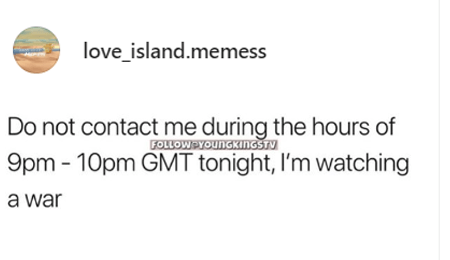
Fancy a chat at 9pm? Sorry,
**insert vague excuse here**
Don’t trust your gut! See new insights on how 2021 will evolve
All eyes are now on June as the nation braces for freedom. But after a year of dispersion, exhaustion and inequality what does 2021 really have in store for brands?
In our latest March event Alison Bainbridge (Founder of Kokoro) and Laura Gillespie (Qualitative Guru) shared the big 10 trends already shaping the thinking of leading brands, including:
- #1 Dispersion sticks
- #2 Home is where the spend is
- #3 Local focus
- #4 Generation P45
- #5 The Boomer Boom
- #6 The hidden epidemic
- #7 The big reset
- #8 Belonging & Freedom = hope
- #9 Slow Leisure
- #10 The Safest Getaways
Watch the event now!
Here’s the jam-packed session with a serious amount of genius steals:

All-seeing audiences
As the audience we really get the measure of people – we know the two-faced, those really falling for each other, the starting of a feud before anyone in the villa. This connects us, because we like holding knowledge of course, but also because we can predict the drama. We’re constantly creating our own trailers and teasers in our minds for what will happen next, very few shows give us so many tools to do this.
Revealing our own boundaries
Glued to Love Island WhatsApp groups for live updates on friends’ reactions during the show and distraction over ad breaks. And if we’re not nattering on WhatsApp we’re doing it in person – watching with our partner, family or friends. Other addictive TV shows don’t see quite the same behaviours. Love Island helps us learn about our own relationships and boundaries, we can test each other without having a tricky conversation or picking a fight. Watching others navigate the highs and lows of friendship and dating allows us to see how our nearest and dearest would react – what they think is fair game, snaky or immature. We’re drawn to this, because we love to know where our nearest and dearest heads are at.
“He shouldn’t have said that in front of everyone”
“I agree”
**follows with a warm glow of aren’t we on the same page**
Compare to:
“He shouldn’t have said that in front of everyone”
“She’s such hard work though, I think she was out of line”
“???!!!!”
**follows with hitting the pause button and a bicker over how hard it is to be the one to put yourself out there
Validation for our fears and reactions
Emotions run high – every episode there’s tears or tantrums. We’re intrigued by this. We’ve all had moments where we haven’t been our best selves. Seeing these reactions validated as normal by watching others do similar, is a nice feeling. Getting a slightly smug reassurance as others do far worse than us can also feel nice.
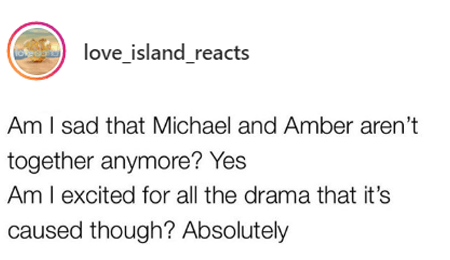
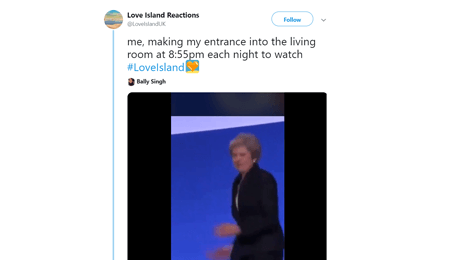
Meme afterparty
For at least half an hour after watching the drama unfold we’re scrolling through Twitter and Insta. Not only are the comments and memes hilarious – they further validate our own reactions. The meme afterparty is open to everyone and helps us feel like we belong.
We are all Iain Stirling
Iain’s sharp commentary is the reality check every viewer needs. Quick to highlight oddities and contradictions – we often find ourselves making similar comments simultaneously or regularly thinking how spot on he is. Iain is important, he’s the down-to-earth voice in a glossy, image-obsessed show. Which means we all feel connected, not alienated, even if we are watching it while wearing a facemask, in our PJs, binging on ice cream.